
REPAIR – MAINTAIN – RESTORE
Silicone Roof Coating in San Diego: For Coastal Roofs and Water That Won't Drain
CSLB #1061541 · Commercial and multifamily properties only
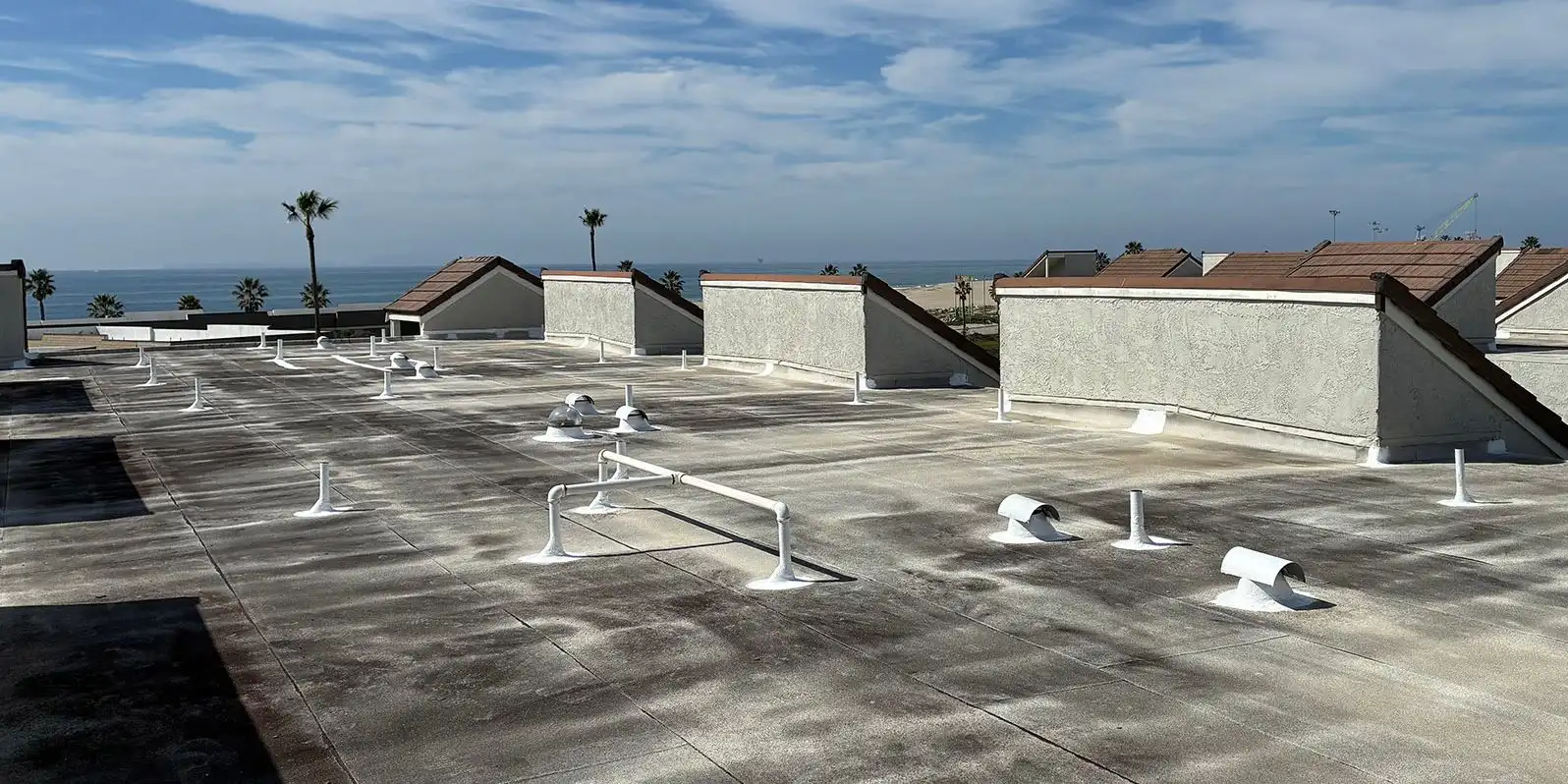
Near the San Diego coast, a commercial roof spends much of its life damp. The marine layer can sit over Sorrento Valley, Carlsbad or Point Loma from evening until late morning, and salt air settles on every surface. The flat spots at drains and behind parapets hold water for days after a winter storm. Silicone roof coating is built for that. It holds up under standing water, cures with moisture in the air, and goes down as a seamless white surface over the roof you already have.
Costa Roofing installs silicone roof coating systems on commercial buildings for property managers, facility directors, HOA boards and asset managers across San Diego County. This page covers the silicone system itself: what we install, how thick it goes on, what it can cover, and where it falls short. If you’re still deciding whether to restore at all, start with commercial roof coating and restoration.
Call 858-339-1848 to request a free roof inspection. Inspections are free anywhere in our San Diego County service area.
When Silicone Is the Right Coating in San Diego
Silicone makes sense when a roof is a sound restoration candidate: dry insulation, attached membrane, a sound deck (the full checklist is on the restoration hub). At least one of these should also be true:
- Water ponds after rain. Many acrylic coatings break down under water that sits for days. Silicone is made to tolerate it, a real advantage on tilt-up roofs that hold water along parapets and at scuppers.
- The building sits in the marine layer. Coastal roofs stay damp for long stretches of the morning, especially in May and June. Silicone’s moisture cure gives it more usable working hours there than water-based coatings get.
- Salt air and long UV exposure. Silicone doesn’t chalk away or turn brittle in sun the way many coatings do, so the surface wears slowly.
In practice, that describes a lot of coastal San Diego County. Think of lab and office buildings in Sorrento Valley and Torrey Pines, and business parks off Palomar Airport Road in Carlsbad. It also fits light industrial buildings in Oceanside, mixed-use buildings in Del Mar and La Jolla, and older low-slope buildings on Point Loma near the harbor. Geography is a starting point, not a rule: drainage and the adhesion test can override it.
Silicone Systems We Install
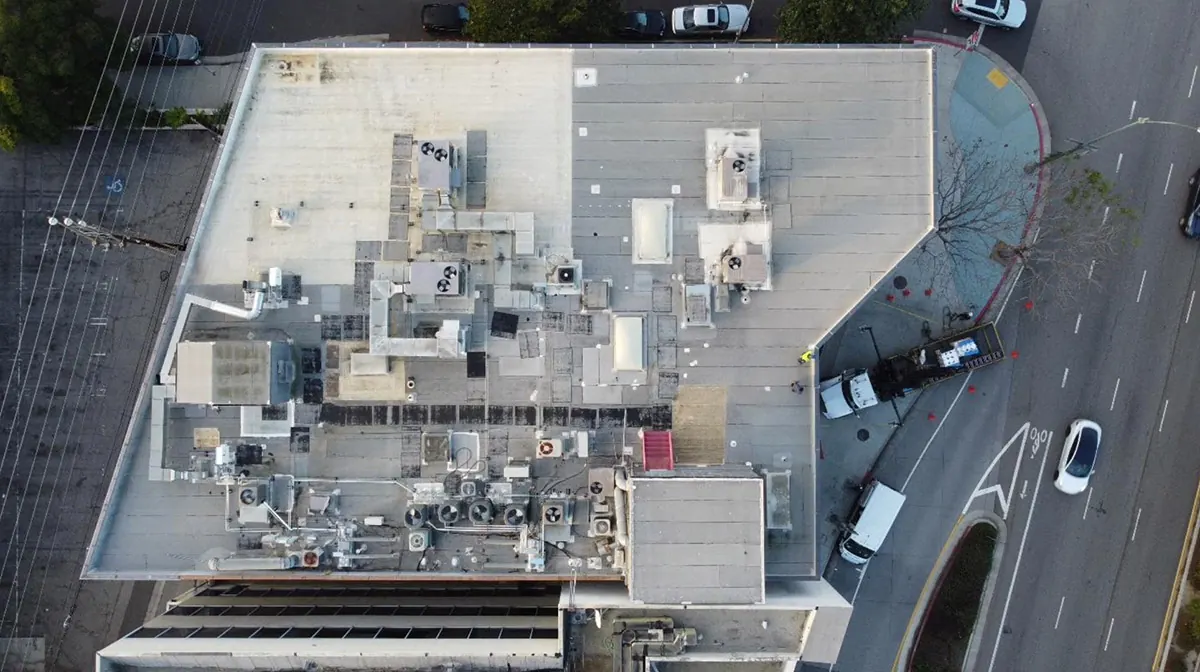
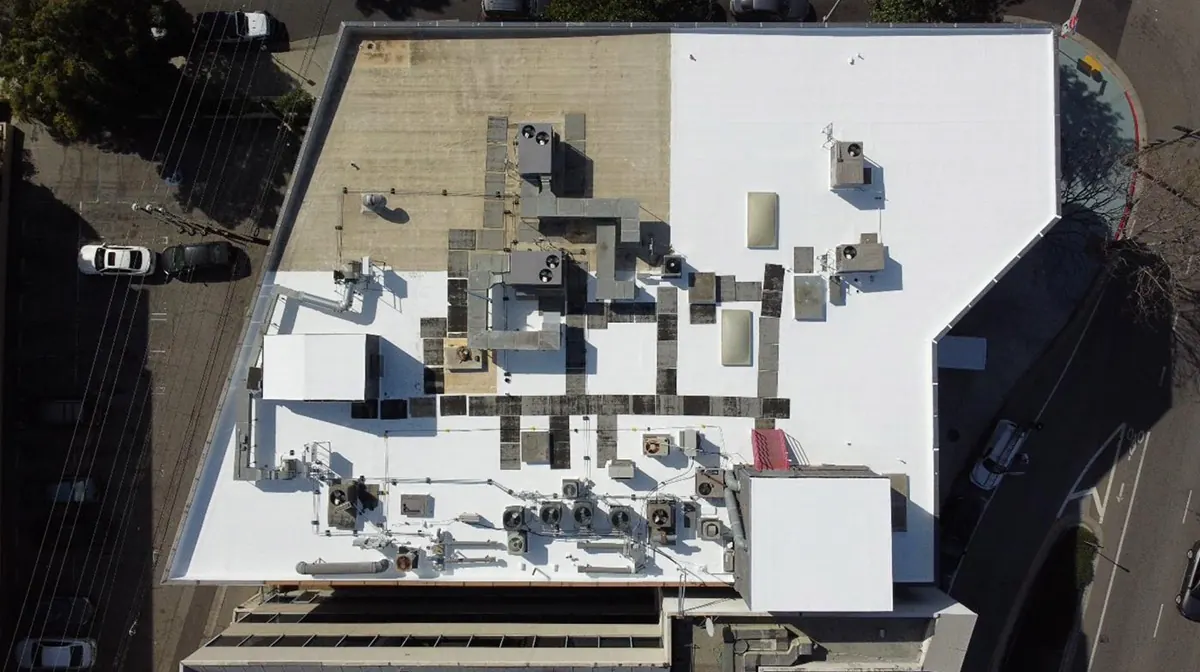
Costa is an approved contractor for APOC, a manufacturer of silicone roof coating systems whose warranties back the work. Our silicone systems are single-component, high-solids coatings, applied in one or two coats over a clean, prepared roof. On most roofs there’s no fabric across the field. Seams, flashings, drains and penetrations are reinforced first, then the field is coated to the specified thickness. Your proposal names each product in the system, including what reinforces the details.
We specify white silicone rated by the Cool Roof Rating Council (CRRC), which is what a San Diego permit needs when a roof is recoated. The Title 24 cool-roof rules themselves are covered on the restoration hub.
Mil Thickness and Warranty Tiers
Coating thickness is measured in mils (thousandths of an inch), and on a silicone roof it’s what earns the warranty term. More mils means more material, a longer term, and usually a manufacturer inspection before the warranty is issued. High-solids silicone loses very little thickness as it cures, so what goes on wet is close to what stays on the roof, but only if it’s applied evenly. We measure as we go and record the readings, so the thickness in the proposal is the thickness on the roof.
Silicone warranties come in 10, 15 and 20-year terms and cover labor and materials. A finished silicone roof is usually 30 to 40 mils thick. The term on your roof depends on the thickness and the condition of the roof underneath.
Silicone Over Single-Ply, Modified Bitumen, Metal and SPF
Every substrate needs its own preparation, and adhesion is tested before we quote. We arrange the test with the coating manufacturer, which applies a test patch, lets it cure and pulls it, with and without primer.
- Single-ply (TPO, PVC, EPDM). Adhesion is the main question. Aged TPO and PVC need thorough cleaning and often a primer, and EPDM almost always needs a dedicated cleaner and primer. Seams are checked and reinforced, because a coating won’t hold a failing seam together.
- Modified bitumen and cap sheet. Loose granules are removed. Asphalt can bleed through and stain white silicone, so these roofs usually get a bleed-blocking primer.
- Metal. Fasteners are sealed, seams and laps reinforced, and surface rust treated and primed. Silicone suits metal roofs near the coast, where salt air speeds up corrosion.
- Spray polyurethane foam (SPF). Silicone is a common topcoat for foam, which breaks down in sunlight once exposed. Recoating before the foam shows through is routine.
- Built-up roofs. Gravel is removed and the surface repaired and reinforced before coating.
Cure and Weather: Why Silicone Works on Damp Coastal Mornings
Silicone cures by reacting with moisture in the air. On the coast that’s an advantage: a humid, overcast morning doesn’t stall the cure the way it does for water-based acrylic. Silicone also generally tolerates cooler application temperatures, so the working season is longer.
The roof surface still has to be clean and dry when the coating goes on; silicone won’t bond through dew. On marine-layer days we wait for the dew to clear, which often means a later start. Some silicone products and primers also carry a solvent odor while they’re applied. On Torrey Pines and Sorrento Valley lab buildings we plan the work around air intakes and occupied spaces.
Dirt Pickup, Reflectivity and Cleaning
The main trade-off with silicone is dirt. Its surface holds airborne dust, salt, pollen and bird droppings more than acrylic does, and a dirty white roof reflects less sun. For that reason cool-roof compliance is based on CRRC’s aged reflectance, not the initial figure: the rating already assumes some weathering.
Silicone cleans well. A low-pressure wash with a cleaner the manufacturer approves brings back most of the reflectivity. How often depends on the building’s surroundings: roofs near the freeway, the airport at McClellan-Palomar or a lagoon collect more than a business park roof set back from traffic. Scheduled cleaning and drain clearing are part of our ROOF PROTECT™ maintenance program. It also keeps the maintenance record a coating manufacturer can ask for at claim time.
Repairing and Recoating Silicone: Only Silicone Sticks
Once a roof is coated in silicone, in practice only silicone will bond to it. Acrylic, asphalt mastic, urethane sealant and most caulks peel off a cured silicone surface. That has consequences for the life of the roof:
- Every repair uses silicone. A mechanical contractor sealing a new curb with whatever is in the truck will leave a patch that doesn’t hold. Tell your vendors, or have repairs go through us.
- Recoating means more silicone. Before the coating wears thin, the roof is cleaned, repaired and recoated with silicone, which costs less than the first restoration. Whether a recoat renews the warranty depends on the manufacturer’s terms, and the recoat proposal will say.
- Plan silicone as the long-term path. Very little else goes over silicone later.
If a silicone-coated roof starts leaking, commercial roof leak repair finds the entry point first. The repair is then made in silicone.
Where Silicone Falls Short
- Slippery when wet. A silicone roof under marine-layer moisture is slick. Anyone going up in the morning needs to know it.
- Soft under foot traffic. Silicone can tear or wear through where people walk and where tools and panels get dropped. We add walkway pads from the roof hatch to HVAC units and around equipment that gets serviced often.
- Usually more expensive than acrylic per square foot, though often in fewer coats and without fabric.
When Acrylic Is the Better Choice
Silicone isn’t always the right answer, and we’ll say so. Acrylic roof coating is often the better value when:
- The roof drains well and sits inland, in Escondido, San Marcos, Poway or East County, where hot dry days give acrylic long working windows.
- A rough built-up or cap sheet roof benefits from an asphalt emulsion base with polyester fabric, which acrylic systems build on.
- Keeping the roof bright with less cleaning, or keeping future repair options open, counts for more than ponding resistance.
- Budget is the deciding factor and the roof doesn’t hold water.
Why Property Managers Choose Costa for Silicone Coating
Costa is a Sika Partner contractor for Sarnafil PVC and an approved contractor for SOPREMA, APOC and Western Colloid; APOC backs the silicone systems we install. Testing comes before the proposal, and thickness readings and photos come with the finished roof (the full sequence is on the restoration hub). California CSLB License #1061541.
Silicone Roof Coating Across San Diego County
We install silicone roof coatings throughout San Diego County, with most silicone work along the coast. That includes Sorrento Valley, Torrey Pines, La Jolla, Del Mar, Carmel Valley, Point Loma, Carlsbad, Encinitas, Oceanside and Chula Vista. We also coat roofs in Kearny Mesa, Miramar, Mission Valley and anywhere a roof holds water. See all San Diego service areas.
Frequently Asked Questions About Silicone Roof Coating
How Much Does a Silicone Roof Coating Cost in San Diego?
It depends on how much repair the roof needs first and the thickness your warranty term calls for. The primer the substrate needs, and how much equipment has to be detailed by hand, also count. You get an itemized proposal with test results and photos before anything is scheduled.
Can Silicone Go on a Roof That Ponds Water?
Yes. That’s its main advantage over acrylic. Silicone won’t correct a sagging deck or a blocked drain, though, so we clear drains and check the structure first. If water is getting into the building, commercial roof leak repair comes first.
Can a Silicone Roof Be Recoated With Acrylic Later?
No. Acrylic won’t bond to cured silicone. A silicone roof is recoated with silicone, after cleaning and an adhesion check.
Is a Silicone-Coated Roof Safe to Walk On?
It’s slippery when wet, including on foggy coastal mornings, and it can tear under repeated foot traffic. We install walkway pads along the routes your HVAC and service contractors use, and we tell your vendors what to expect.
Request a Free Silicone Roof Coating Inspection
Tell us about the building: the roof type, approximate size, where it is in the county, where water sits after rain, and any leak or warranty history. We’ll inspect the roof and tell you whether silicone, acrylic or something else is right for it.
Call 858-339-1848 or request a free inspection online.