
REPAIR – MAINTAIN – RESTORE
Commercial Roof Coating and Restoration in San Diego: The Right System for Coast or Inland
CSLB #1061541 · Commercial and multifamily properties only
Commercial roofs rarely fail all at once. The surface wears out first: cap sheet granules wash into the drains, seams weather open, single-ply chalks in the sun. Underneath, the insulation and deck are often still dry and sound. If that’s your roof, a fluid-applied restoration system puts a new, seamless waterproofing surface over the roof you already have, without a tear-off.
Costa Roofing restores commercial roofs with silicone and acrylic coating systems for property managers, facility directors, HOA boards and asset managers across San Diego County. We test the roof before we recommend anything, and choose the system for the building’s exposure: marine layer near the coast, heat and UV inland. If your roof isn’t a candidate, we’ll tell you and show you why.
Call 858-339-1848 to request a free roof inspection. Inspections are free anywhere in our San Diego County service area.
Restore, Repair or Replace: Where Coating Fits
Repair fixes specific failures on a roof that’s otherwise sound: a split seam, a lifted flashing, a puncture. If that’s all the roof needs, see commercial roof repair. If water is coming in now, start with commercial roof leak repair.
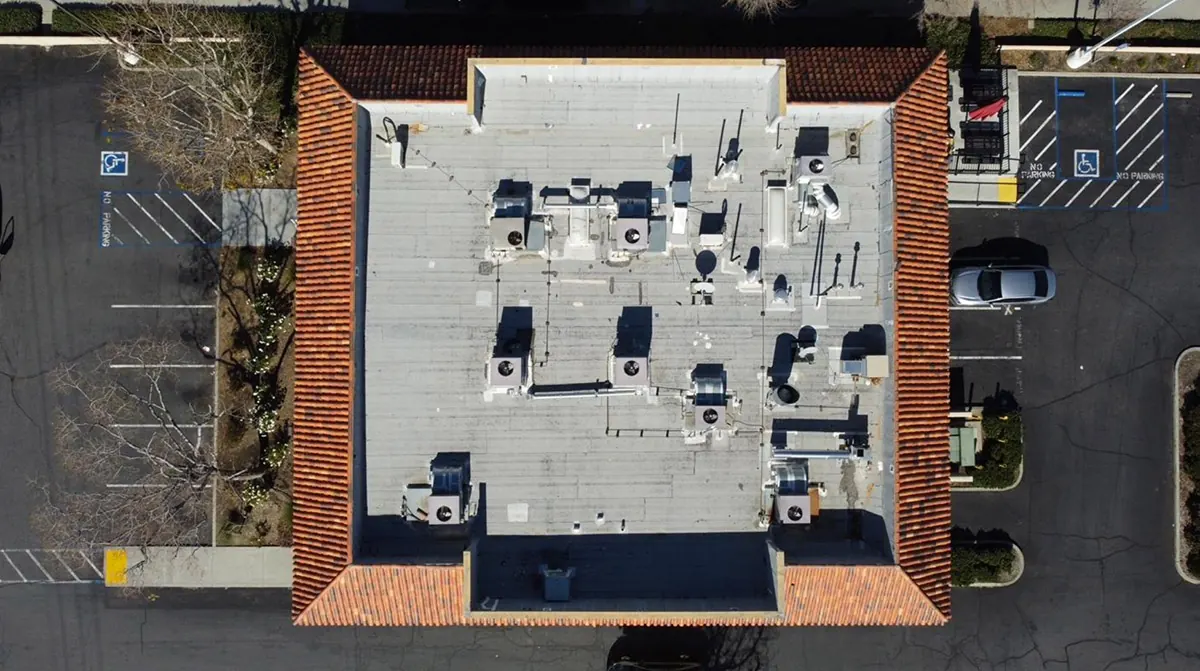
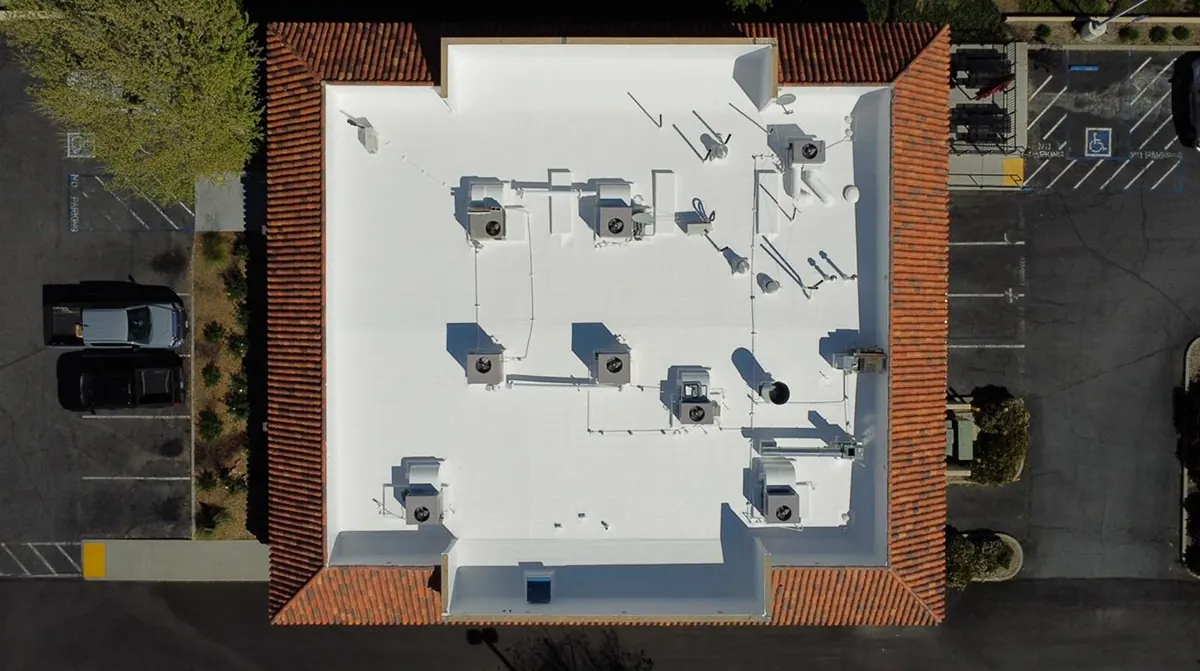
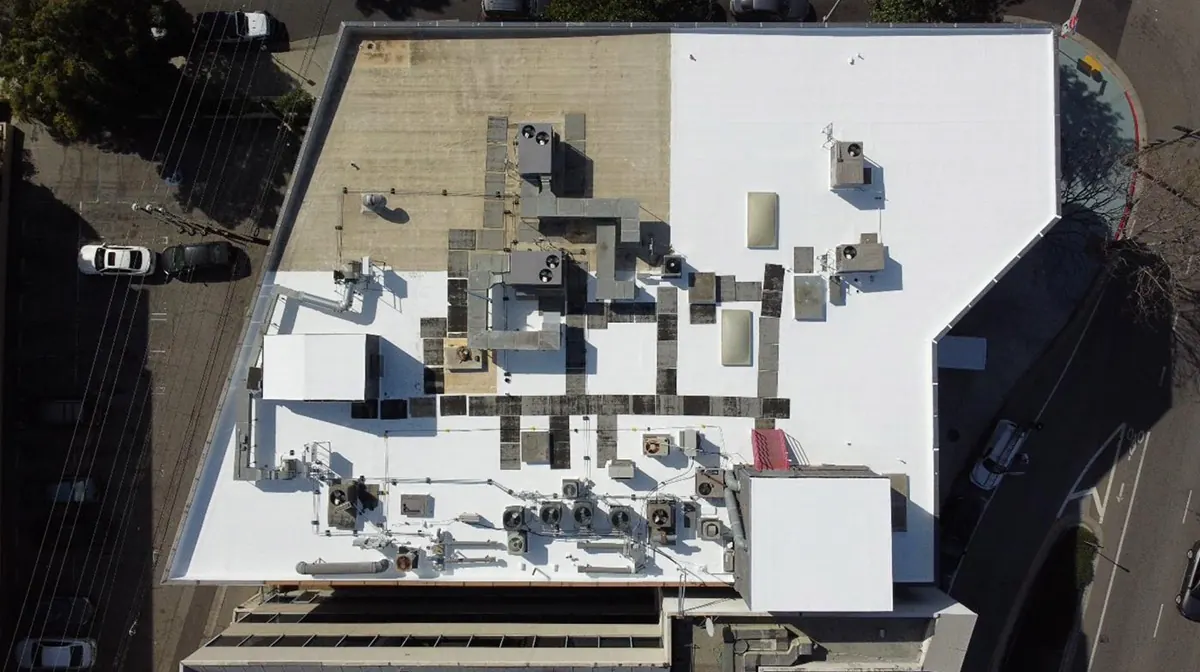
Restoration is for a roof whose surface is aging across the whole field while the layers beneath are dry and still attached. The existing roof stays in place as the base of a new coating system.
Replacement is the answer when water has reached the insulation or deck across large areas, or the membrane has come loose from what’s under it. Coating over wet or unattached material seals the problem in. When a roof needs replacing, we re-roof it in Sika Sarnafil PVC, tearing off or recovering depending on what’s underneath.
Is Your Roof a Candidate for Restoration?
Most aging commercial roofs that aren’t yet failing can be restored. What’s underneath decides it, not how the surface looks.
Good Candidates
- Membrane still attached to the insulation or deck, with only local blisters or loose spots
- Insulation dry, or wet only in limited areas that can be cut out and replaced first
- Water drains off the roof, or ponding can be corrected or handled by a system rated for it
- Surface worn but intact: cap sheet shedding granules, weathered modified bitumen, chalking single-ply, metal with surface rust only
- A structurally sound deck
Not a Candidate
- Saturated insulation across a large share of the roof. It keeps damaging the deck and pushes moisture up under a new coating.
- Widespread wet or deteriorated deck: rusted steel, soft wood, spalled concrete.
- Failed membrane adhesion. Wrinkling, blisters across the field or single-ply pulling loose leaves nothing stable for a coating to hold.
- Shrunk or brittle single-ply pulling flashings away from walls and curbs.
- Metal rusted through, beyond surface rust.
- Structural ponding that no system can be warranted over until the roof is re-sloped.
How We Find Out
We don’t judge candidacy from the ground or from photos. Core cuts come first. A small sample cut shows every layer, how many roofs are on the deck and whether the insulation is wet, and it’s patched the same day. Where wet insulation may have spread, a thermal scan maps it. Most roofs don’t need one; when one does, we bring in a thermal-scan specialist we work with. Adhesion testing shows whether the coating will bond: a test patch is applied, cured, then pulled. The coating manufacturer performs the test, and we arrange it. All results come with the proposal.
Silicone or Acrylic: Choosing a Coating for Coast or Inland
We don’t put one product on every roof. The choice turns on how long water sits after rain, the building’s exposure, the existing roof, the adhesion test and the owner’s recoat plans.
Silicone Roof Coating
Silicone tolerates standing water that breaks down most acrylics, and holds up to long UV exposure. It cures with moisture in the air, so damp coastal mornings cost it less working time, and it usually goes on without fabric. The trade-offs: it picks up dirt, which lowers reflectivity unless it’s cleaned; it’s slippery when wet; and at recoat time only more silicone will bond to it. Systems, thickness and warranties: silicone roof coating.
Acrylic Roof Coating
Acrylic is water-based, stays bright, recoats easily and usually costs less than silicone. Over rough built-up and cap sheet roofs it often goes on an asphalt emulsion base with polyester fabric for strength. It needs a dry roof, warm dry hours to cure and good drainage, because it isn’t designed to sit under ponding water. Emulsion and fabric builds, thickness and warranties: acrylic roof coating.
Where San Diego Buildings Usually Land
- Coastal: Sorrento Valley, Torrey Pines, La Jolla, Carlsbad, Oceanside. The marine layer can keep a roof damp until late morning, especially in May and June, and salt air carries well inland. Low-slope roofs here hold water at drains and behind parapets. We usually start with silicone.
- Inland: Escondido, San Marcos, Poway and East County. Hotter summers, stronger UV and wide daily temperature swings. On a roof that drains well, acrylic is often the better value, and inland weather gives it longer dry working days.
- In between: Kearny Mesa and Miramar. The marine layer reaches these mesas some mornings and not others, so the roof decides: ponding along parapets points to silicone, a well-drained cap sheet roof to acrylic.
Ponding and the adhesion test can change the answer anywhere. An Escondido roof that holds water for days after a storm needs silicone, or its drainage corrected first.
Roof Types We Restore
- Modified bitumen and cap sheet, the most common candidates in San Diego. Asphalt can bleed through a white coating in the sun, so these usually need a bleed-blocking primer or an emulsion base.
- Built-up roofing (BUR). Loose gravel is removed, and alligatored areas are repaired and reinforced.
- Metal. Fasteners sealed, seams reinforced, rust treated and primed. Rusted-through panels are replaced first.
- Single-ply: TPO, PVC and EPDM. A coating can extend an aging single-ply roof, but adhesion is the big question, and each membrane needs its own cleaning and primer.
- Spray polyurethane foam (SPF). The coating is what protects the foam from UV, so recoating before foam is exposed is routine.
- Previously coated roofs. We identify the existing coating first, because the new one has to be compatible.
How a Commercial Roof Restoration Works
Inspection and Core Cuts
We walk the whole roof, photograph it, take core cuts, and check drainage, flashings, penetrations and rooftop equipment. If the cores suggest wet insulation beyond one spot, we’ll recommend a thermal scan.
Adhesion Test and Written Proposal
Where the roof needs it, we arrange for the coating manufacturer to test the proposed system on your roof. Then you get an itemized proposal with photos: the system and why, wet areas to replace, repairs before coating, specified thickness, warranty term and cost. If the roof isn’t a candidate, the proposal says so.
Cleaning
The roof is pressure washed to remove dirt, chalk, loose granules, droppings and restaurant grease, then left to dry fully.
Repairs and Detail Preparation
Wet insulation is cut out and replaced. Blisters and open seams are repaired, flashings, curbs, drains and penetrations are rebuilt where needed, and details are reinforced as the manufacturer’s system requires.
Primer Where Needed
Asphalt that could bleed through, rusted metal and some single-ply membranes get a primer, as the adhesion test and specification call for.
Coating at a Measured Thickness
The coating goes on in the number of coats the system calls for, at a specified thickness in mils. Thickness is what earns the warranty term, and it’s the easiest thing to skimp on, so we measure as we go and record the readings.
Final Inspection and Warranty Registration
We inspect the finished roof, touch up thin spots, and send before-and-after photos, thickness records and product documentation. Where the manufacturer inspects before issuing the warranty, we schedule it, then register the warranty in the owner’s name.
Coatings need dry weather, so most restoration is scheduled between the end of the rainy season and fall, with coastal work planned around the marine layer.
What Restoration Costs Compared With Replacement
Restoration usually costs substantially less than replacement, because most of a new roof’s cost never happens. No tear-off, no landfill hauling, no new insulation across the whole roof and no full set of new flashings.
What moves the price:
- Preparation. Wet insulation replacement and seam, blister and flashing repair are usually the biggest variable.
- System and thickness. More mils means more material and a longer warranty.
- Fabric. Full-field reinforcement costs more than reinforcing seams and details only.
- Size, access and equipment. Large, open tilt-up roofs cost less per square foot than small roofs crowded with curbs and pipes.
Owners sometimes treat a coating differently from a new roof for tax purposes; ask your tax advisor, and we’ll provide an itemized invoice.
Warranties and the Recoat Cycle
Restoration systems are backed by the coating manufacturer, so the warranty doesn’t depend on any one contractor staying in business. Costa’s restoration warranties run up to 20 years. The term on a given roof depends on the system, the applied thickness and the condition underneath, and the proposal states it. Depending on the thickness applied, a restoration can add 10 to 25 years to a roof.
A coating wears slowly. Before it wears through, the roof can be cleaned, repaired where needed and recoated. That costs less than the first restoration, and it can renew the warranty where the manufacturer’s terms allow. Most coating warranties also expect the roof to be kept clean and the drains clear. Our ROOF PROTECT™ maintenance program does that and keeps the record a manufacturer asks for at claim time.
Title 24 Cool Roofs, CRRC Ratings and SDG&E
California’s Energy Code (Title 24, Part 6) treats recoating a low-slope commercial roof as an alteration. When more than half the roof, or 2,000 square feet if that’s less, is replaced, recovered or recoated, the new surface generally has to meet cool-roof requirements. That means a product rated by the Cool Roof Rating Council (CRRC) for aged solar reflectance and thermal emittance. It applies to nonresidential low-slope roofs in both the coastal and inland climate zones that cover most of San Diego County. The code also requires field-applied coatings to cover the whole roof at the manufacturer’s specified thickness.
We specify CRRC-rated white silicone and acrylic products and supply the ratings your permit and compliance forms need. Requirements change with each code cycle, so we confirm them when the job is permitted with the City of San Diego or your local building department.
A reflective roof also runs cooler, which can cut cooling load in single-story inland buildings. SDG&E business programs change, so check with SDG&E before counting on an incentive; we’ll supply the product documentation.
Commercial Buildings We Restore in San Diego
- Tilt-up industrial, Kearny Mesa, Miramar, Carlsbad and San Marcos. Large, open roofs behind parapets, where ponding at scuppers decides the system.
- Lab and biotech, Sorrento Valley and Torrey Pines. Crowded equipment roofs, detailed by hand and planned around air intakes and tenant access rules.
- Retail centers, Escondido, Oceanside and San Marcos. Restaurant grease cleaned off, mismatched tenant repairs sorted out, and every tenant open.
- Office and business parks, Carlsbad, Poway and the I-15 corridor. Older built-up and modified bitumen roofs, restored without a tear-off over occupied space.
- HOA and multifamily. Flat sections over units, carports and walkways, planned years ahead as a reserve-study line item.
Why San Diego Property Managers Choose Costa for Restoration
Costa is a Sika Partner contractor for Sarnafil PVC and an approved contractor for SOPREMA, APOC and Western Colloid. APOC and Western Colloid make the coating systems we install and back the restoration warranties. California CSLB License #1061541. For an independent condition report first, see our ROOF INSPECT program.
Commercial Roof Coating Across San Diego County
We restore commercial roofs throughout San Diego County. That includes Sorrento Valley, Torrey Pines, La Jolla, Carmel Valley, Kearny Mesa, Miramar, Mira Mesa, Carlsbad and Oceanside. We also work in Vista, San Marcos, Escondido, Poway, Rancho Bernardo, Mission Valley, Encinitas, Chula Vista and El Cajon. See all San Diego service areas.
Frequently Asked Questions About Commercial Roof Coating and Restoration
Can You Coat a Roof That’s Leaking Right Now?
Not until we know why. A coating can seal over an entry point while water keeps spreading underneath. We trace the leak, find out how far the water has gone and replace wet material before coating. If it’s urgent, commercial roof leak repair comes first.
Will Coating Our Roof Void the Existing Roof Warranty?
It can. Some membrane warranties don’t allow coatings, or require the manufacturer’s approval first. Send us the warranty before any work is scoped. Once the roof is restored, the coating manufacturer’s warranty is the one that covers it going forward.
Can the Building Stay Open During Restoration?
Yes. Nothing is torn off over tenants. We coordinate roof access, and on lab, medical and restaurant buildings we plan around air intakes, because some coatings and primers have an odor while they cure.
Request a Free Roof Restoration Inspection
Tell us about the building: roof type if you know it, approximate size, where it is in the county, and any leak or warranty history. We’ll test the roof and recommend restoration only if the roof can carry it.
Call 858-339-1848 or request a free inspection online.