
REPAIR – MAINTAIN – RESTORE
Acrylic Roof Coating in San Diego: Reflective Restoration for Well-Drained Inland Roofs
CSLB #1061541 · Commercial and multifamily properties only
On a well-drained commercial roof away from the coast, an acrylic coating is often the most cost-effective way to restore it. Acrylic is a water-based elastomeric coating, usually white, that goes on as a liquid and cures into a seamless, flexible membrane over the roof you already have. It reflects sunlight, stays bright, and can be recoated when it wears thin.
Costa Roofing installs acrylic roof coating systems from Western Colloid and APOC, both manufacturers Costa is approved with. We work for property managers, facility directors, HOA boards and asset managers across San Diego County. Most are cap sheet, built-up or metal roofs on inland buildings in Kearny Mesa, Miramar, Mira Mesa, San Marcos, Escondido, Poway and Vista. We’ll also tell you when acrylic is the wrong choice, usually because water sits on the roof.
Call 858-339-1848 to request a free roof inspection. Inspections are free anywhere in our San Diego County service area.
Where Acrylic Fits in a Roof Restoration
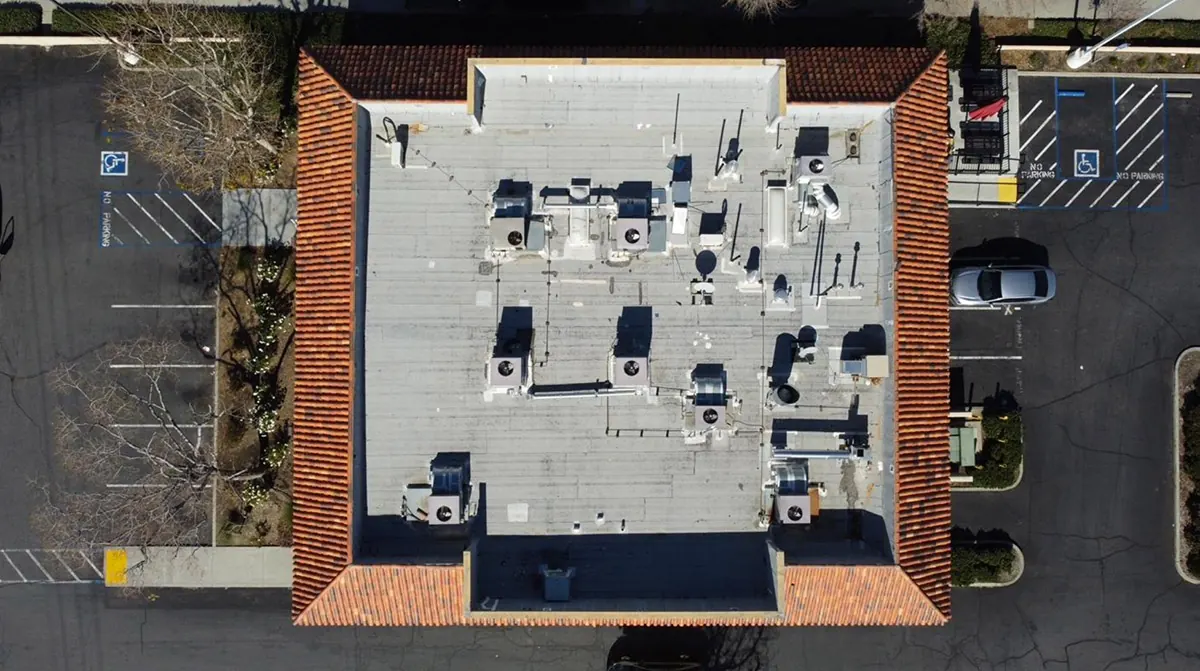
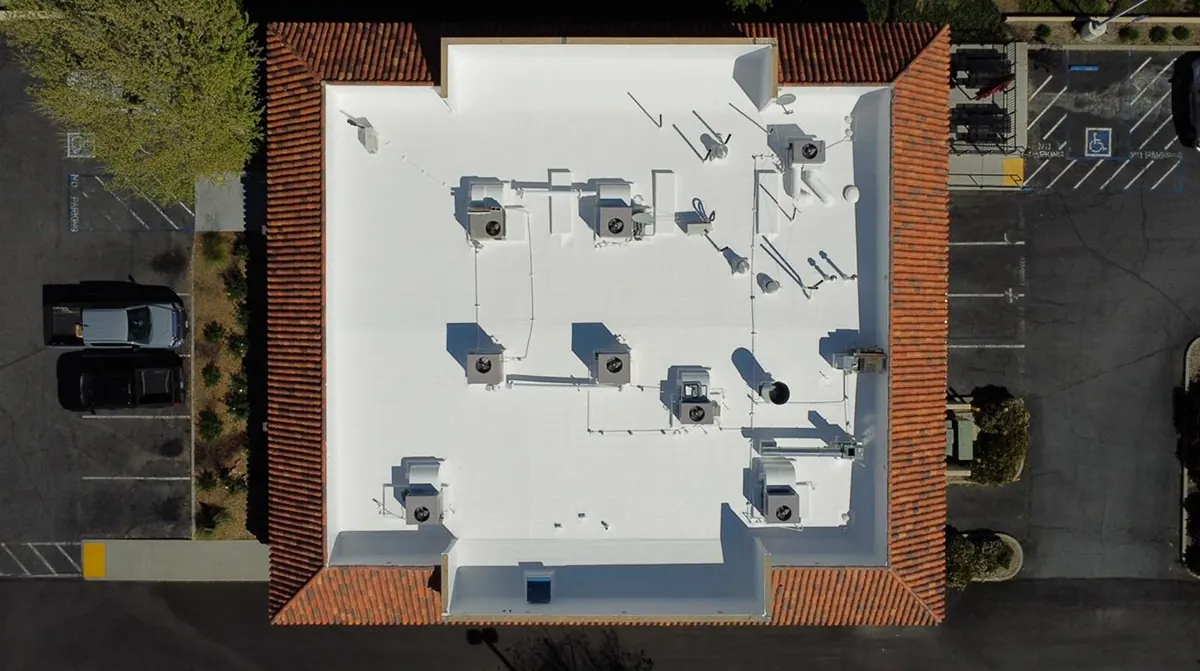
An acrylic coating restores a roof; it doesn’t rescue a failing one. The roof must be a restoration candidate first (dry insulation, attached membrane, sound deck), which we confirm by testing before recommending any coating. Candidacy, testing, the step-by-step process and when to restore, repair or replace are all covered on our commercial roof restoration page. If water is coming in now, start with commercial roof leak repair. Leaks are traced and fixed before any coating goes down.
Why Acrylic Suits Inland San Diego Roofs
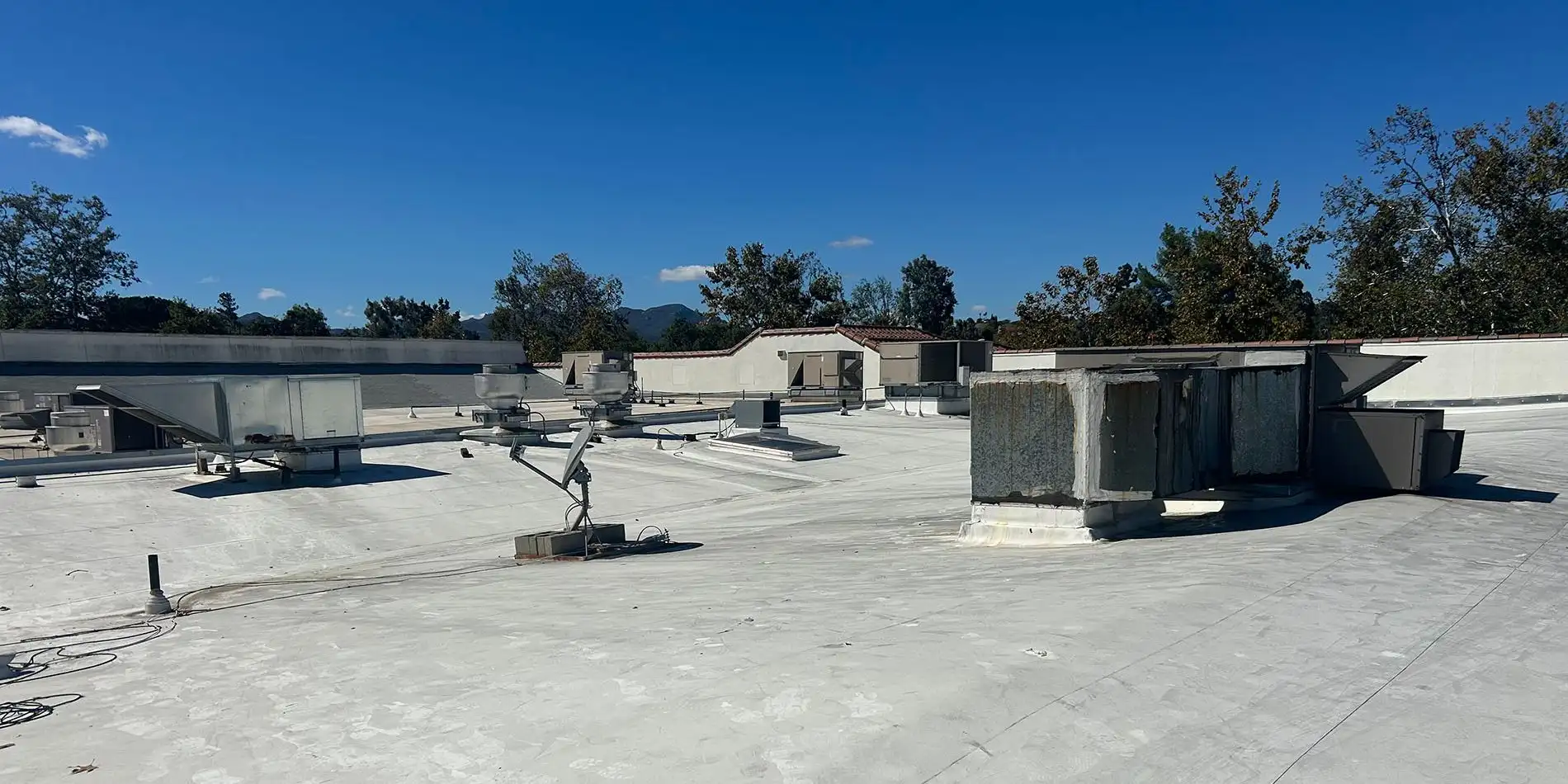
Away from the coast, summer roof surfaces run far hotter than the air, and UV exposure is intense. On a tilt-up warehouse in Miramar or a retail center in Escondido, a dark cap sheet or weathered built-up roof absorbs that heat all afternoon, then cools sharply overnight. That daily swing, along with UV, is what dries and cracks asphalt roof surfaces.
A white acrylic coating addresses both. It shields the roof below from UV and reflects much of the sun’s heat, so the surface runs cooler and moves less between day and night. The coating stays flexible as it does. It also picks up less dirt than silicone, so it keeps more of its reflectivity between cleanings, a real gain on single-story inland buildings.
Inland weather also suits the way acrylic cures. It needs dry, warm hours, and Poway, San Marcos and East County get more of them than the coast does. White acrylic products rated by the Cool Roof Rating Council (CRRC) can meet California’s cool-roof requirements for recoating. The Title 24 cool-roof rules are covered on the restoration page.
Acrylic Systems We Install
The build depends on what the roof is made of and how rough its surface is.
Asphalt Emulsion Base With Polyester Fabric
On built-up, cap sheet and modified bitumen roofs, the system often starts with an asphalt emulsion base coat with polyester fabric set into it while it’s wet. The emulsion bonds well to asphalt roofs, fills rough and alligatored surfaces, and helps stop asphalt oils from bleeding up and staining the white finish. The fabric adds strength and bridges cracks and seams. Emulsion is black and doesn’t hold up in sunlight on its own, so acrylic topcoats go over it to provide the UV protection and reflectivity.
Straight Acrylic
On smoother, sound surfaces the system can be acrylic from base coat to topcoat, with a primer where the surface needs one. That includes metal roofs, roofs already coated with acrylic, and some cap sheets that pass an adhesion test. It’s a lighter build, though seams, fasteners and flashings are still reinforced.
Full-Field or Details-Only Reinforcement
Fabric can go across the whole roof or only at seams, flashings, penetrations, drains and repairs. We use full-field reinforcement on roofs with widespread cracking, alligatored built-up surfaces or a history of patchwork, where the whole field needs the added strength. Details-only reinforcement suits a roof whose field is sound and whose weak points are the transitions. Full-field costs more, and the manufacturer’s specification for the warranty term you choose sets where the fabric has to go.
Western Colloid and APOC
Costa is approved by both, so systems are installed to their specifications and warranted by the manufacturer. Your proposal names each product in the build, from primer and base coat to fabric and topcoat.
Mil Thickness and Warranty Tiers
Each warranty tier has a minimum dry thickness, measured in mils (thousandths of an inch). A longer term generally means more material, more coats or fabric. We measure thickness while the coating goes on and include the readings in your completion documents.
Acrylic warranties come in 10, 15 and 20-year terms and cover labor and materials. A finished acrylic roof is usually 30 to 60 mils thick. They come from the coating manufacturer, so coverage doesn’t depend on any one contractor.
What Acrylic Can Go Over
- Cap sheet and modified bitumen, the most common acrylic restorations in San Diego, usually with an emulsion base or bleed-blocking primer.
- Built-up roofing (BUR). Loose gravel is removed first, and alligatored areas are repaired and reinforced.
- Metal. Fasteners and seams are sealed and reinforced, and rust is treated and primed.
- Existing acrylic coatings. Acrylic over acrylic is the normal recoat, after cleaning and any primer the manufacturer calls for.
- Single-ply (TPO, PVC). Possible only with the right primer and a passed adhesion test. Aging single-ply often suits silicone better.
Acrylic doesn’t go over silicone. Very little bonds to a silicone roof except more silicone. If your roof was coated before and nobody knows with what, we identify the coating before quoting.
Weather Windows: When Acrylic Can Go Down in San Diego
Acrylic cures as its water evaporates. Until it cures, rain can wash it off, and heavy dew can leave it streaked or sticky. Each product data sheet sets minimum temperatures and how long the coating must stay dry. We schedule to those limits, not the calendar:
- Rain. We don’t coat ahead of forecast rain. Between November and March, work is planned around storm systems, and on larger roofs the rainy season stretches the schedule.
- Marine layer mornings. Through May Gray and June Gloom, and on marine-layer mornings any time of year, a roof in Kearny Mesa or Mira Mesa can stay damp until the cloud burns off. We wait until the surface is dry, which can mean a late start.
- Dew and overnight temperatures. Coating applied too late in the afternoon may not skin over before evening dew settles or the temperature drops. Crews stop early enough for each coat to set.
- Inland heat. On the hottest days in Escondido or Poway, some products set too quickly on a very hot surface. Crews start early and work within the product’s limits.
Once the rains end and June Gloom clears, San Marcos, Escondido, Poway and Vista usually give more good working days than the coast.
When Silicone Is the Better Choice
Acrylic is the right system on a lot of San Diego roofs, but not all of them. We recommend silicone roof coating instead when:
- Water ponds. Acrylic isn’t designed to sit under standing water. The industry usually defines ponding as water still on the roof 48 hours after rain, and acrylic warranties generally exclude those areas. Parapet-walled tilt-ups often hold water along the walls and at scuppers. Unless the drainage can be corrected, we recommend silicone.
- The building sits in the marine layer. On coastal buildings, long damp mornings make an acrylic schedule harder to keep. Silicone cures using moisture in the air and is less affected by them.
- The roof already has silicone on it. Only silicone recoats silicone.
- The roof is aging single-ply. Silicone is the more common choice over aging TPO and PVC, subject to the adhesion test.
The reverse also holds: on a well-drained inland roof, silicone costs more, picks up more dirt and commits the roof to silicone at every recoat.
Maintaining and Recoating an Acrylic Roof
Acrylic wears gradually: sun and rain erode the surface, so it thins over the years rather than failing all at once. The goal is to recoat before it wears through.
Maintenance is simple: keep drains and scuppers clear so water doesn’t stand, and rinse off dirt so the roof stays reflective. Repair damage from foot traffic, dropped tools and equipment swaps before water gets under the coating. At recoat time, the roof is cleaned, repaired where needed, primed if specified and topcoated, which costs far less than the original restoration. Whether a recoat renews the warranty depends on the manufacturer’s terms, and the recoat proposal will say.
Most coating warranties expect documented maintenance. Our ROOF PROTECT™ maintenance program handles the cleaning, drains and inspections, and keeps the photo record a manufacturer asks for when you make a claim.
Why San Diego Property Managers Choose Costa for Acrylic Coating
Costa is a Sika Partner contractor for Sarnafil PVC and an approved contractor for SOPREMA, APOC and Western Colloid; APOC and Western Colloid back the acrylic warranties. If your roof ponds or sits in the marine layer, we’ll recommend silicone even when acrylic would be the cheaper quote. California CSLB License #1061541.
Acrylic Roof Coating Across San Diego County
We install acrylic roof coatings throughout San Diego County, with most acrylic work on inland buildings. That includes Kearny Mesa, Miramar, Mira Mesa, Poway, Escondido, San Marcos, Vista, Rancho Bernardo and El Cajon. See all San Diego service areas.
Frequently Asked Questions About Acrylic Roof Coating
How Much Does an Acrylic Roof Coating Cost in San Diego?
It depends most on repairs needed first, emulsion-and-fabric versus straight acrylic, full-field versus details-only fabric, and the thickness the warranty term requires. Acrylic usually costs less than silicone. You get an itemized proposal with photos before anything is scheduled.
Is Acrylic the Same as Elastomeric Roof Coating?
Mostly. “Elastomeric” means the coating stretches and recovers as the roof expands and contracts. Silicone is elastomeric too, but when a roofer or supplier says “elastomeric roof coating,” they usually mean a white acrylic.
How Often Does an Acrylic Roof Need Recoating?
It depends on thickness, sun exposure and upkeep. We check thickness during maintenance visits and recommend a recoat before the coating wears through, while it’s still a cleaning-and-topcoat job.
Will a White Acrylic Roof Stay White?
It will get dirty, but acrylic holds onto dirt less than silicone, and rinsing it restores most of the reflectivity. Near restaurant exhausts or dusty industrial yards, plan on cleaning it more often.
Request a Free Acrylic Roof Coating Inspection
Tell us about the building: roof type if you know it, approximate size, where it is in the county, and whether water stands on the roof after rain. We’ll inspect the roof and tell you whether acrylic, silicone or something else is the right call.
Call 858-339-1848 or request a free inspection online.