
REPAIR – MAINTAIN – RESTORE
PVC Roofing in San Diego From an Approved Sika Sarnafil Contractor
CSLB #1061541 · Commercial and multifamily properties only
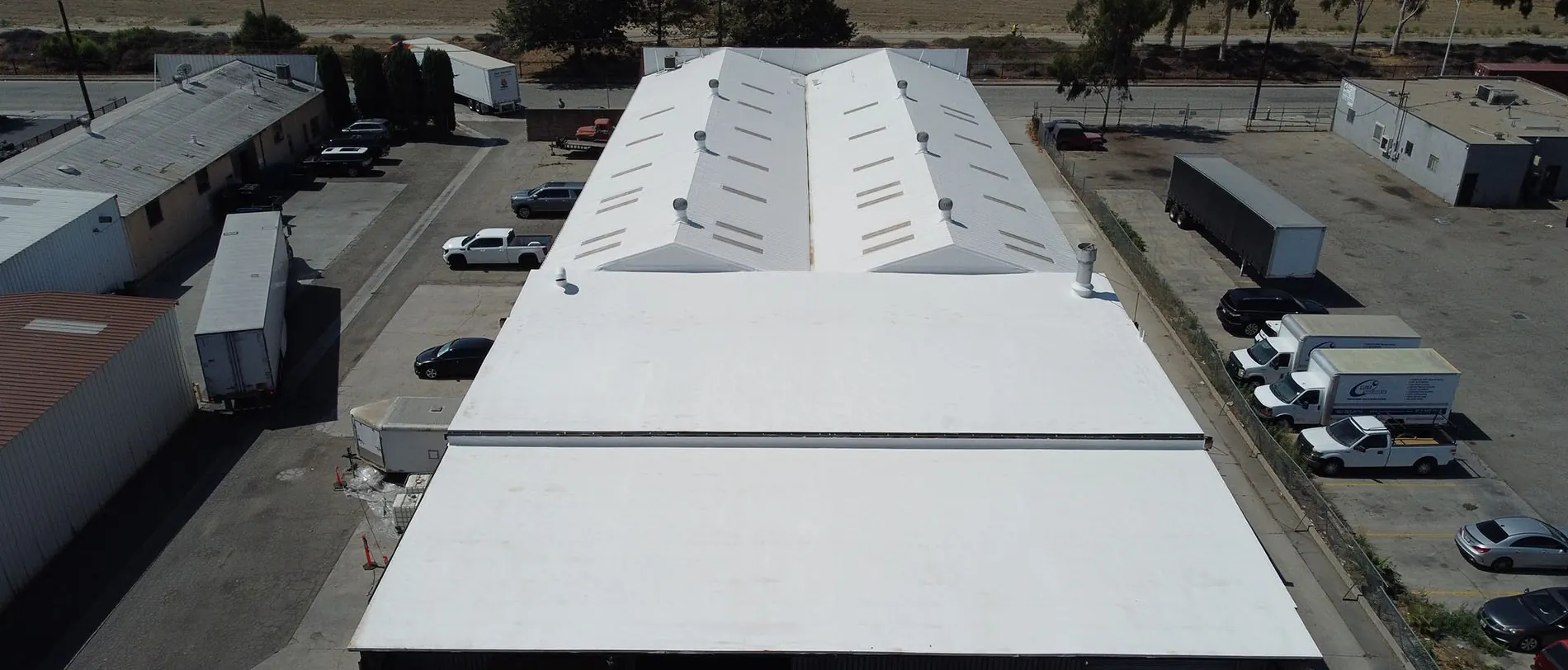
A PVC roof is only as good as its welds, flashings and fastening pattern, and only as protected as the warranty behind it. That warranty comes from the membrane manufacturer, which decides who may install and repair its roofs. Costa Roofing is a Sika Partner contractor, approved to install and warrant Sarnafil PVC roofs. We install, re-roof, repair and maintain PVC membrane roofs on commercial buildings across San Diego County, to Sika’s published details. That way the roof carries a manufacturer warranty that doesn’t depend on us staying in business.
We work for property managers, facility directors, HOA boards, owners and asset managers. If PVC isn’t the right roof for your building, we’ll say so.
Call 858-339-1848 to request a free roof inspection. Inspections are free anywhere in our San Diego County service area.
What a Sika Sarnafil Approval Means for an Owner
Anyone with a hot-air welder can put down PVC. Getting it warranted is harder: Sika issues its warranties only on roofs installed by contractors it has trained and approved. For an owner, that approval does three things.
The roof is built to the manufacturer’s specification. Membrane, fasteners, adhesives, cover board and flashing details come from the system Sika has tested. Nothing is substituted to save a line on the bid.
The manufacturer inspects the finished roof. On a warranted roof, Sika’s technical representative inspects the installation before the warranty is issued. Weak welds and bad details get fixed then, before the roof is yours.
The warranty is the manufacturer’s, not ours. It’s registered to the building and backed by Sika, so coverage doesn’t disappear if the installer does. The Sarnafil roofs we install qualify for Sika’s No Dollar Limit warranty. It covers the membrane and the installation together, with no cap on the cost of covered repairs for the warranty’s term. Terms of 10, 15 and 20 years are all common, and 20 years has become the industry standard. The term depends on the system and specification, and the proposal states it.
The approval counts after installation too. Most Sarnafil warranties expect repairs and alterations by an approved contractor with compatible materials, so a new HVAC curb from the wrong crew can put coverage at risk. Send us the warranty and we’ll confirm what it requires before any work starts.
What PVC Is, and Why It Suits San Diego Buildings
PVC (polyvinyl chloride) roofing is a single-ply thermoplastic membrane, reinforced with a polyester scrim and usually white. The sheets are joined by heat-welding. Hot air melts the edges of two sheets together, so the seam becomes one continuous piece of membrane with no tape or glue to dry out. Properly welded seams are among the strongest parts of the roof.
What makes it a good fit here:
- Coastal exposure. In Carlsbad, Oceanside, Del Mar and La Jolla, salt air and marine-layer mornings keep roofs damp. Welded seams don’t rely on adhesive, and PVC tolerates standing water at drains. The weak points are usually edge metal, coping and fasteners, so we detail those for salt air.
- Grease from restaurant exhaust. Kitchen fans deposit animal fats that break down asphalt roofs and many other membranes. PVC resists them far better, so it’s a common choice for retail centers with restaurant tenants. Grease still needs containing and cleaning off, and some manufacturers make a specific membrane for heavy exposure.
- Lab and biotech exhaust. Fume-hood stacks on Sorrento Valley and Torrey Pines roofs can put chemicals on the membrane. PVC’s chemical resistance is broad but not universal, so we check the manufacturer’s guidance against what your building actually exhausts before recommending it.
- Reflectivity and Title 24. White PVC is made to meet cool-roof ratings, and replacing most of a low-slope roof generally triggers California’s cool-roof requirements. We specify a rated membrane and supply the documentation. How the Title 24 cool-roof rules and CRRC ratings work is covered on our commercial roof coating and restoration page.
- Fire performance. PVC is inherently flame-resistant, and Class A-rated assemblies are available. The rating belongs to the tested assembly, deck and insulation included, so we match the assembly to what your building and insurer require.
- Wind. Santa Ana gusts pull at edges and corners first, so attachment is designed for the building’s height and exposure, with extra at perimeters and corners.
PVC or TPO?
Both are white, heat-welded, single-ply thermoplastic membranes, and on a plain warehouse roof they can do much the same job. The differences:
- Grease and chemicals. PVC holds up better to oils, fats and many chemicals. Near restaurant exhaust or lab stacks, that usually decides it.
- Fire. PVC’s chemistry gives it inherent flame resistance. TPO relies on fire-retardant additives.
- Cost. TPO generally costs less per square foot to install, which is why it’s common on large, simple industrial roofs.
- Aging. Older PVC formulations could lose plasticizer and stiffen with age. Modern premium membranes are formulated to limit that, so the specific membrane counts for more than the label.
- They don’t mix. PVC and TPO can’t be welded to each other. Repairs, additions and flashings must match the membrane already on the roof.
We can install TPO, but we rarely recommend it. PVC has the longer track record on commercial roofs, and its welds are more forgiving to make and to repair years later. It also carries the Sarnafil No Dollar Limit warranty we can stand behind. If an owner asks for TPO on a price-driven roof, we’ll quote it and explain the trade-off in writing.
Membrane Thickness and Feltback
PVC thickness is measured in mils (thousandths of an inch), and we install both of the common commercial thicknesses, 60 and 80 mil. Thicker membrane adds puncture resistance and supports longer warranty terms, so on an equipment-crowded lab roof or one technicians cross every week, 80 mil usually earns its cost.
Feltback membranes have a fleece backing that cushions against rough surfaces and lets the sheet be fully adhered, which suits some recovers and roofs where deck fasteners are unwanted. Sika makes both smooth and feltback PVC, and the proposal names the exact membrane.
Installation Methods
We install PVC mechanically fastened or fully adhered. Which one depends on the deck, the existing roof, the wind design and the building’s use.
- Mechanically attached. Plates and screws fasten the membrane through the insulation into the deck along each seam, and the next sheet is welded over them. Efficient on large steel-deck warehouses.
- Fully adhered. The membrane is glued to a cover board or insulation across the whole roof. No flutter in wind, and a good choice over concrete decks. Some adhesives have an odor while they cure.
PVC Re-Roofs: Tear-off or Recover
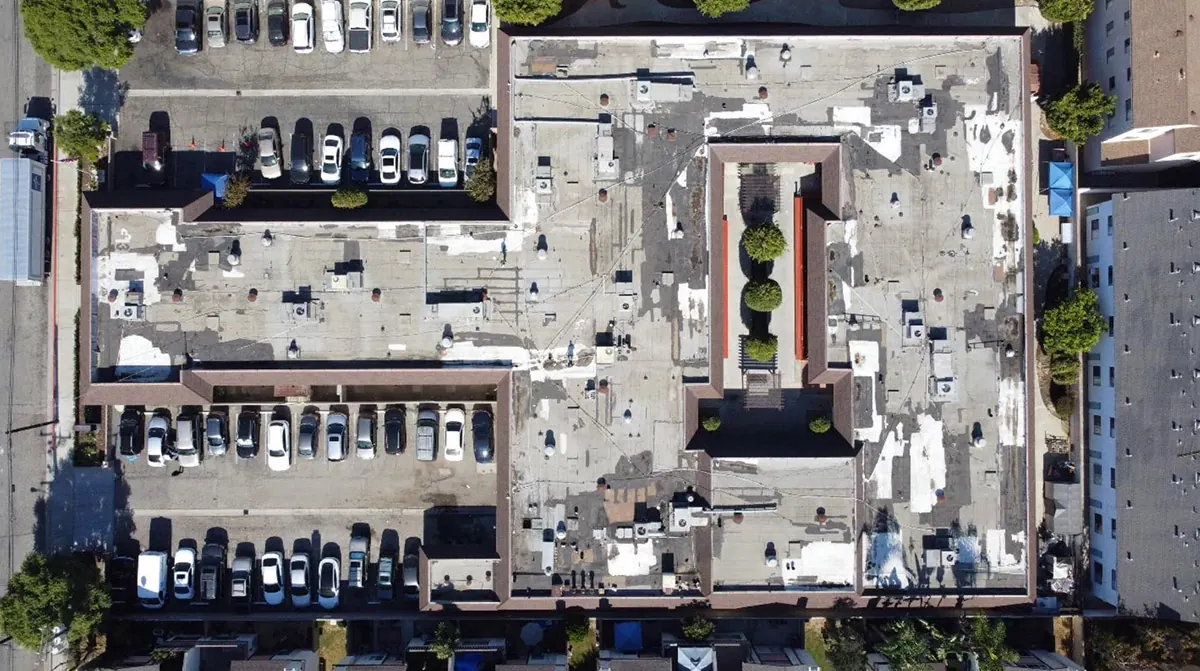
Most new PVC roofs in San Diego go on existing buildings, replacing a built-up, cap sheet, modified bitumen or aging single-ply roof. We quote PVC re-roofs both ways, tear-off and recover.
Recover puts the new PVC system over the existing roof after wet areas are cut out, skipping most of the tear-off cost. Building code generally doesn’t allow it over wet or deteriorated roofing, or where two or more roofs are already in place.
Tear-off removes everything to the deck, and is required when insulation is saturated, two roofs are already there, or the deck needs repair.
A cover board usually goes under the membrane: a firm, smooth base that resists foot traffic and separates PVC from old asphalt roofing it shouldn’t touch.
Insulation is decided at the same time. Replacing a low-slope roof can trigger Title 24 insulation requirements, depending on climate zone and what’s already there. We confirm them with the City of San Diego or your local building department and price them into the proposal, not mid-job.
The Full PVC Lifecycle
Repairs
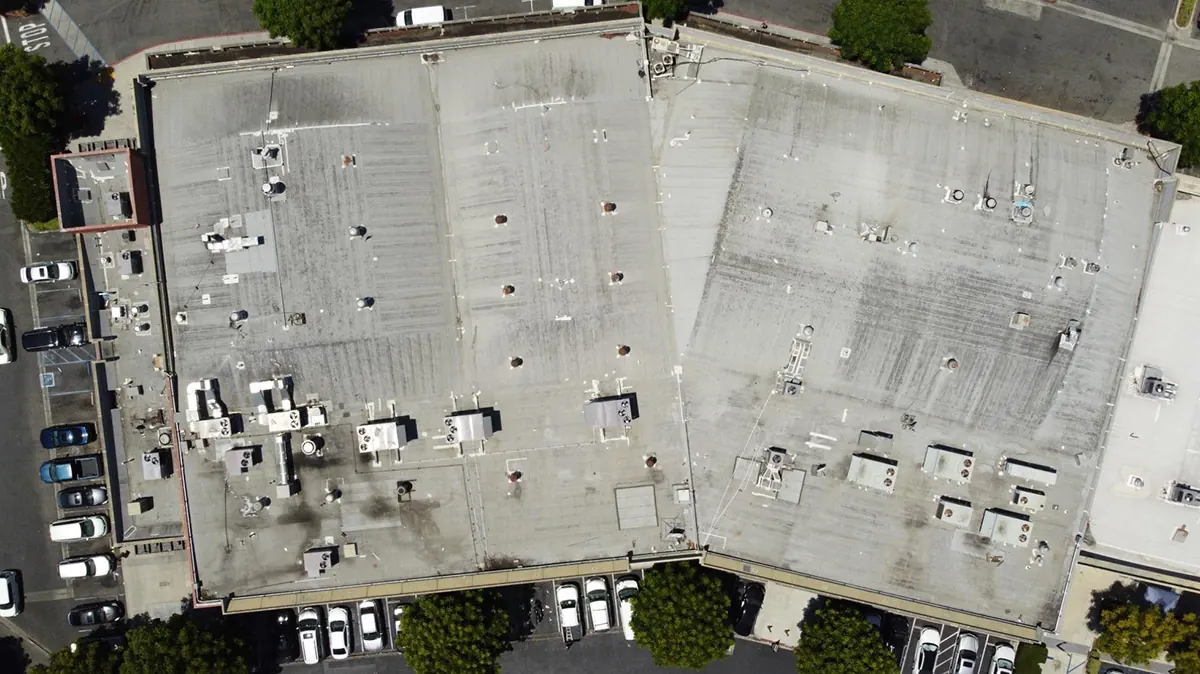
PVC is repaired with PVC: failed seams re-welded, punctures covered with welded patches, shrunk or split flashings rebuilt. Older membrane needs cleaning and preparation before a new weld will take. Mastic over a PVC seam is not a repair. For repairs across every roof system, see commercial roof repair; if water is already coming in, start with commercial roof leak repair.
Maintenance
Most PVC problems start at drains, penetrations and whatever the last HVAC crew touched. Our ROOF PROTECT™ maintenance program clears drains, checks welds and flashings, and keeps the documented record a manufacturer asks for at claim time.
Restoration of Aging PVC
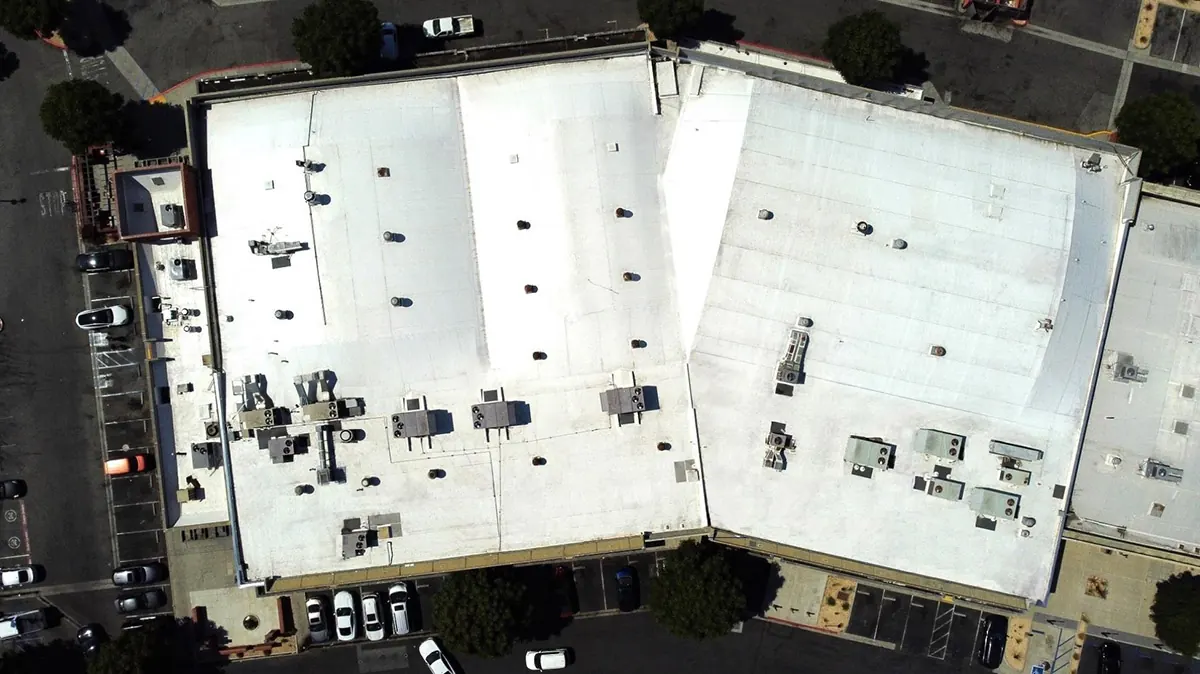
When an older PVC roof is sound but weathered, a coating can extend its life without a tear-off. The membrane has to be attached, the insulation dry, and the coating has to pass an adhesion test. Brittle or shrinking PVC isn’t a candidate. Aging single-ply usually suits silicone roof coating. Whether to restore or replace is covered in commercial roof coating and restoration. If you want an independent condition report first, see ROOF INSPECT.
How a PVC Roof Installation Works
Inspection and Core Cuts
We walk and photograph the roof and check drainage, edges and penetrations. Core cuts show how many roofs are already on the deck, what they’re made of and whether the insulation at each cut is wet. That decides between a recover and a tear-off. If wet insulation may have spread across the field, we’ll bring in a thermal scan before the scope is final. Most roofs don’t need one.
Written Proposal and Specification
You get an itemized proposal with photos: tear-off or recover, membrane and thickness, attachment method, insulation and cover board, and flashing and edge metal details. It also states the warranty type and term, permit and Title 24 items, and cost. If PVC isn’t the right system, the proposal says so.
Installation to the Manufacturer’s Requirements
Work is scheduled around tenants and operations, and sections are sealed at the end of each day. Welds are probed as they’re made, and details follow Sika’s published drawings, not crew habit.
Manufacturer Inspection and Warranty Registration
We schedule Sika’s inspection, correct anything it flags, and register the warranty in the owner’s name. You receive the warranty, before-and-after photos and the as-built system details for your building records.
What a PVC Roof Costs
The biggest variables are tear-off versus recover and how much wet insulation has to come out. Membrane thickness, attachment method, hand-detailed penetrations and curbs, roof access, insulation requirements and the warranty term follow. We price every roof after a free inspection, and every proposal is itemized, so you can see what each choice costs.
Buildings We Put PVC on in San Diego
- Lab and biotech, Sorrento Valley and Torrey Pines. Dense equipment, fume-hood exhaust and penetrations added at every tenant improvement.
- Restaurants and food service. Kitchen exhaust grease, from stand-alone restaurants to food tenants in retail centers.
- Retail centers. Mixed tenant roofs, sign supports and years of patches from different contractors.
- Industrial and logistics, Kearny Mesa, Miramar, Carlsbad, San Marcos, Vista and Poway. Large tilt-up roofs where wind design and drainage drive the specification.
- Medical office. Occupied buildings where odor, noise and air intakes shape the schedule.
- HOA and multifamily. Flat sections over units, planned as a reserve-study item.
Why San Diego Property Managers Choose Costa for PVC
Costa is a Sika Partner contractor and an approved contractor for SOPREMA, APOC and Western Colloid. On PVC, that means manufacturer-inspected installs and No Dollar Limit warranties Sika backs, from one contractor for the life of the roof. California CSLB License #1061541.
PVC Roofing Across San Diego County
We install and service PVC roofs throughout San Diego County. That includes Sorrento Valley, Torrey Pines, La Jolla, Carmel Valley, Kearny Mesa, Miramar, Mira Mesa, Carlsbad and Oceanside. We also work in Vista, San Marcos, Escondido, Poway, Rancho Bernardo, Mission Valley, Encinitas, Chula Vista and El Cajon. See all San Diego service areas.
Frequently Asked Questions About PVC Roofing
How Long Does a PVC Roof Last?
A Sarnafil roof should last 25 to 35 years. Where it falls in that range depends on membrane thickness, how the roof is built and how it’s maintained. Regular maintenance protects both the roof and the warranty.
Can the Building Stay Open During a PVC Re-Roof?
Yes. Hot-air welding uses no open flame and no hot asphalt, which makes PVC one of the easier systems to install over occupied buildings. We work in sections that are sealed each day. On labs, medical offices and restaurants we plan around air intakes and choose low-odor adhesives where the roof is adhered.
Request a Free PVC Roof Inspection
Tell us about the building: current roof type, approximate size, location in the county, what’s on the roof, and any existing warranty. We’ll inspect it at no charge and recommend PVC only if it’s the right system.
Call 858-339-1848 or request a free inspection online.