
REPAIR – MAINTAIN – RESTORE
Commercial Roof Maintenance in San Diego: The ROOF PROTECT™ Program
CSLB #1061541 · Commercial and multifamily properties only
Most commercial roofs in San Diego County don’t wear out. They get neglected. A drain fills with dust and leaves over the dry months, and a curb sealant cracks in the August heat. A mechanical contractor leaves an access panel on the membrane. Nobody walks the roof until a tenant reports water in December.
ROOF PROTECT™ is Costa Roofing’s commercial roof maintenance program for property managers, facility directors, HOA boards and asset managers across San Diego County. We visit on a schedule timed around San Diego’s rainy season, clear the drains, fix small problems while they’re still small, and send a photo report after every visit. Over time that becomes the documented history a manufacturer asks for at warranty-claim time, and that ownership asks for at budget time.
Call 858-339-1848 to talk through a maintenance plan for your building or portfolio. It starts with an inspection, which is free anywhere in our San Diego County service area.
What ROOF PROTECT™ Maintenance Covers
A maintenance program is scheduled, hands-on work on a roof that isn’t failing yet. Each ROOF PROTECT™ plan is built around the building, the roof system and the owner’s budget, and includes:
- Scheduled visits, normally two a year, set before and after the rainy season.
- The same checklist on every visit, so conditions can be compared year over year.
- Drain, scupper and debris clearing, including trash, leaves, bird nesting material and debris left by other trades.
- Minor repairs during the visit: resealing penetrations, pipe boots, corners and drains with mastic or sealant matched to the roof system. We also seal exposed fasteners and metal seams, and open and seal small blisters. Your plan spells out which small repairs are part of the visit and which are quoted separately.
- Post-storm checks after significant rain or Santa Ana winds.
- A photo report after every visit, stored in Costa’s customer portal alongside earlier reports.
- A documented history of the roof: what was found, what was done, and what’s recommended next.
What maintenance doesn’t cover: if water is already coming in, that’s commercial roof leak repair. If you only need an inspection and written report, with no hands-on work, that’s our ROOF INSPECT program. Repairs larger than a visit can handle go through commercial roof repair, with their own proposal and photos.
We maintain PVC (including Sika Sarnafil systems), TPO, built-up and cap sheet, modified bitumen, EPDM, and acrylic- and silicone-coated roofs.
What We Check on Every Visit
- Drains, scuppers, gutters and downspouts: cleared, strainers and clamping rings in place, water able to leave the roof.
- Membrane surface: splits, punctures, blisters, worn cap sheet, loose granules, exposed scrim.
- Seams and laps: open edges, failed adhesive, fishmouths.
- Flashings at parapets, walls, curbs and roof edges.
- Penetrations: pipes, conduit, vents, exhaust stacks, sign supports and pitch pans.
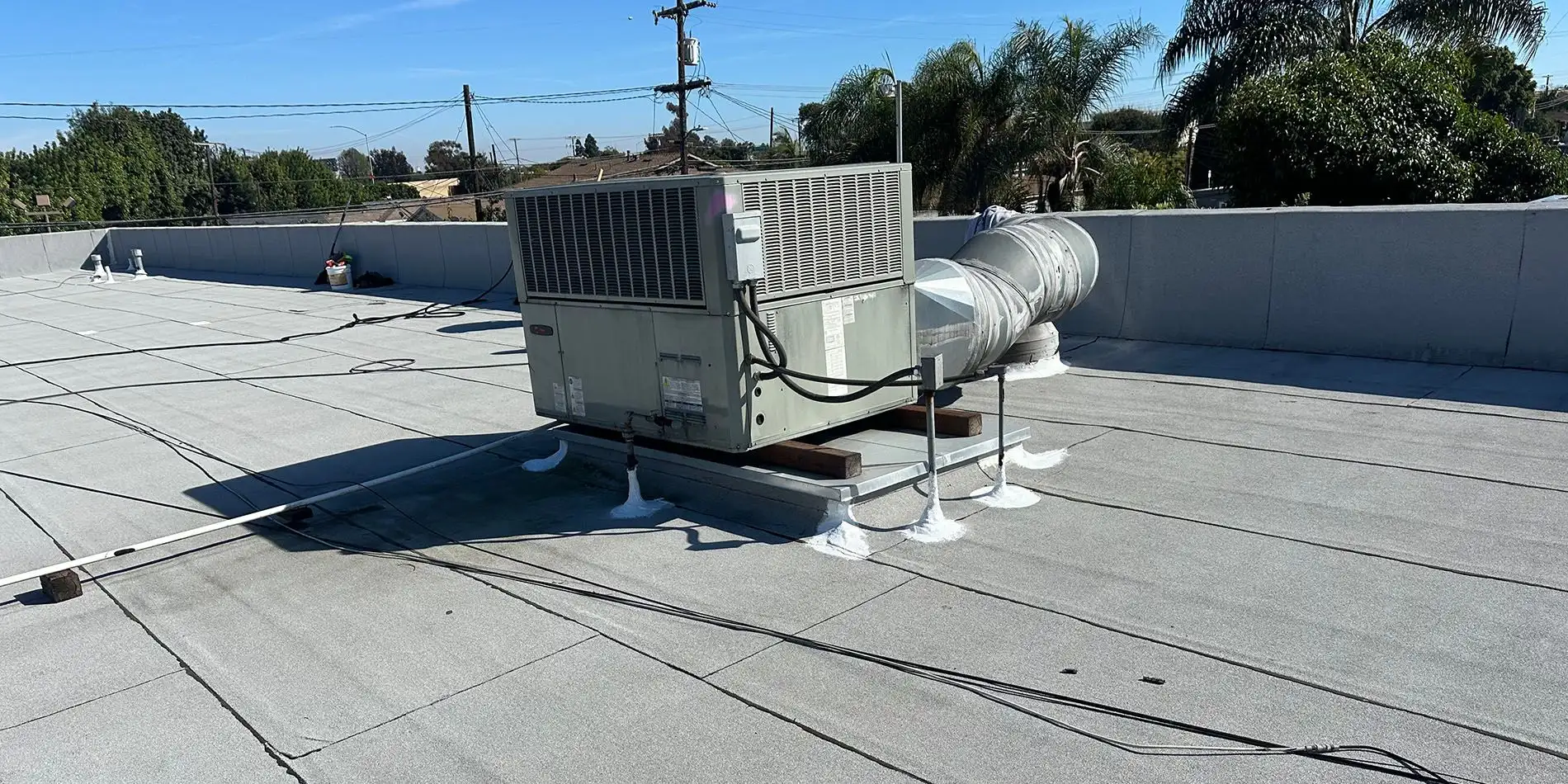
- HVAC curbs and equipment: curb flashing, open access panels, condensate lines draining onto the roof, screws and debris left after service calls.
- Metal: coping, edge metal, counterflashing and fasteners, checked for corrosion and wind lift.
- Ponding: areas holding water 48 hours after rain.
- Coatings: wear, chalking and bare spots on coated roofs.
- Skylights, hatches and ladders: seals, curbs and safe access.
- New work since last visit: equipment added during tenant improvements, and whether its penetrations were flashed properly.
Timing Maintenance Around San Diego’s Rainy Season
San Diego County gets most of its rain between November and March, after a long dry summer. That pattern sets the schedule.
Pre-season visit, September to October. This is the most important visit. Months of dry weather leave dust, leaves and debris in drains and scuppers, and summer heat opens up sealant around curbs and penetrations. Clearing and resealing in the fall means the first storm finds a roof that’s ready for it.
Post-first-storm check. The first real storm of the season is the best test a roof gets. A quick check afterward catches ponding, a drain that couldn’t keep up, or a flashing that let go, while there’s still time to fix it before the wettest months.
Spring visit, April to May. After the rainy season we document what the winter did and repair it before the summer heat bakes in the damage. Spring is also when many owners and HOA boards set next year’s budgets, so the report arrives when it’s useful.
What San Diego Weather Does to a Roof Between Visits
- Santa Ana winds, fall into winter, lift edge metal and coping and pile palm fronds against drains. The damage often shows weeks later when the rain arrives, so pre-season and post-storm visits check metal as well as drains.
- Salt air on the coast. In Oceanside, Carlsbad and Sorrento Valley, coping, edge metal, drain bodies and fasteners corrode faster. We watch rust at metal-to-membrane joints, where a corroded flashing becomes next year’s leak.
- Heat inland. In Escondido, San Marcos and the inland valleys, daily expansion cracks mastic and wears coatings and cap sheet faster, so inland roofs need more resealing. Coated roofs are checked for thin spots before they wear through; see silicone and acrylic.
On Kearny Mesa and Miramar tilt-ups and Sorrento Valley lab roofs, the bigger risk is often other trades cutting new penetrations during tenant improvements that nobody flashes. Gull and pigeon nesting under HVAC units and solar racks ends up in the drains.
Why Documented Maintenance Protects Your Roof Warranty
Most manufacturer roof warranties put obligations on the building owner, and routine maintenance is usually one of them. When you make a claim, the manufacturer may ask for proof the roof was maintained. Missing records, or repairs made with the wrong materials, can give it grounds to deny the claim.
ROOF PROTECT™ builds that record as it goes: dated visits, photos of each checklist item, and a note of every repair and the material used. It also records tenant improvement work that added equipment or penetrations, which is often where warranty disputes start.
Costa is a Sika Partner contractor for Sarnafil PVC and an approved contractor for SOPREMA, APOC and Western Colloid. Maintenance repairs on those systems use the manufacturer’s own materials and details. If a different manufacturer warrants your roof, send us the warranty and we’ll tell you what it requires before the first visit.
Maintenance Records for Reserve Studies and Capital Planning
A roof is one of the largest items in a building’s capital plan, and the hardest to budget if nobody knows its condition. Maintenance reports give the people who set budgets something to work from.
- HOA boards: California’s Davis-Stirling Act requires a reserve study with a visual inspection of major components at least every three years. Dated photo reports give the reserve specialist a condition history for the roof instead of its age alone.
- Asset managers and REITs: a documented condition record supports hold-or-sell decisions, lender and insurance questions, and due diligence when a building trades.
- Facility directors: prioritized recommendations (fix now, plan for next year, keep watching) turn the roof into a planned expense instead of an emergency one.
When a roof nears the end of its life, years of photos show whether it’s still a candidate for commercial roof restoration or needs replacing.
One Program Across a Portfolio
If you manage several buildings, ROOF PROTECT™ can cover them under one plan: one schedule, one report format and one contact. Each building gets its own roof inventory (system, approximate age, warranty holder and expiry) and visit history, so you can compare roofs when you set capital priorities. That works for a single business park in Carlsbad or San Marcos, or a mix of industrial buildings in Miramar, an HOA in Oceanside and a retail center in Escondido.
ROOF PROTECT™ or ROOF INSPECT: Which One You Need
Both programs put a Costa roofer on your roof on a schedule and produce a photo report. The difference is what happens on the roof.
ROOF INSPECT is inspection and documentation only. It suits owners who need an independent condition record for due diligence, a reserve study or an insurance renewal.
ROOF PROTECT™ adds the hands-on work: drains cleared, debris removed and minor repairs made during the visit, plus post-storm checks. It suits owners who want the roof looked after as well as looked at.
Not sure? Ask, and we’ll tell you which one your roof actually needs.
How a ROOF PROTECT™ Plan Starts
Baseline Inspection
We walk the whole roof, photograph its current condition, note the system and approximate age, and collect whatever warranty and repair history you have. That baseline is what every later visit is compared against.
A Plan Built for the Building
You get a written proposal with photos: visit schedule, what each visit covers, any repairs the roof needs before maintenance makes sense, and the cost. Plans are tailored to the building, tenant access rules and your budget cycle.
Scheduled Visits
Visits follow the San Diego calendar: before the rains, after the first storm and in spring. We coordinate access with your team and work around tenants, including labs and medical offices with access restrictions.
A Report After Every Visit
Each report shows what we checked, what we found, what we fixed and what we recommend, with photos.
Annual Review
Once a year we review the roof’s history with you and update the repair and replacement outlook for the capital plan.
Why San Diego Property Managers Choose Costa for Maintenance
Commercial and multifamily roofs only, no houses. If maintenance won’t save a roof, we’ll tell you instead of selling visits it doesn’t need. California CSLB License #1061541.
Commercial Roof Maintenance Across San Diego County
We maintain commercial roofs throughout San Diego County. That includes Kearny Mesa, Miramar, Mira Mesa, Sorrento Valley, Torrey Pines, Carlsbad and Oceanside. We also work in Vista, San Marcos, Escondido, Poway, Rancho Bernardo, Mission Valley, Encinitas, Chula Vista and El Cajon. See all San Diego service areas.
Frequently Asked Questions About Commercial Roof Maintenance
What Does ROOF PROTECT™ Cost?
It depends on roof size, the number of buildings, how much equipment is on the roof, visit frequency and access. You get a written proposal with the full scope and cost before anything is scheduled.
Our Roof Is Only a Few Years Old. Does It Need Maintenance?
Yes, and a newer roof is the best time to start. Drains clog and other trades damage new roofs just as they do old ones, and starting the record early is what keeps a long warranty enforceable.
Can You Maintain a Roof Another Contractor Installed?
Yes. The installer doesn’t have to be us. We’ll check who holds the warranty and what it requires, and use materials compatible with the system so we don’t create a warranty problem while fixing a small one.
Our HVAC Contractor Is on the Roof Every Month. Isn’t That Enough?
No. HVAC technicians look at the equipment, not the roof. They often cause the problems a roof maintenance visit finds: screws on the membrane, open panels, condensate draining onto the roof, and new penetrations nobody flashed.
What Happens If You Find a Bigger Problem During a Visit?
We photograph it, explain it in the report and send a separate proposal. If it’s urgent, such as an active leak or loose edge metal ahead of a storm, we’ll call you rather than wait for the report. Nothing beyond the agreed maintenance scope is done without your approval.
Request a ROOF PROTECT™ Maintenance Proposal
Tell us about the building or buildings: roof type if you know it, approximate size, and any warranty or leak history. We’ll inspect the roof, show you what we found, and propose a maintenance plan sized to what it actually needs.
Call 858-339-1848 or request a maintenance proposal online.